Recent scientific trials on the efficacy of MDMA assisted therapy has created lots of excitement around a ‘breakthrough treatment’ for those suffering from Post Traumatic Stress Disorder (PTSD) and Complex PTSD (C-PTSD). Particularly following the promising start and ultimate shut down of drug-assisted therapy trials in the 1960’s. (Nature Medicine)
PTSD is a debilitating condition that reaches far into the heart of an individual’s life, affecting their ability to function in usual settings and disturbing close personal relationships. People with PTSD tend to struggle with one or a number of the following symptoms: dissociation, suicide ideation, insomnia, flashbacks, depression, hyper-arousal and substance abuse as well as physical symptoms and stress that will affect the longevity of the person’s body. (NHS)
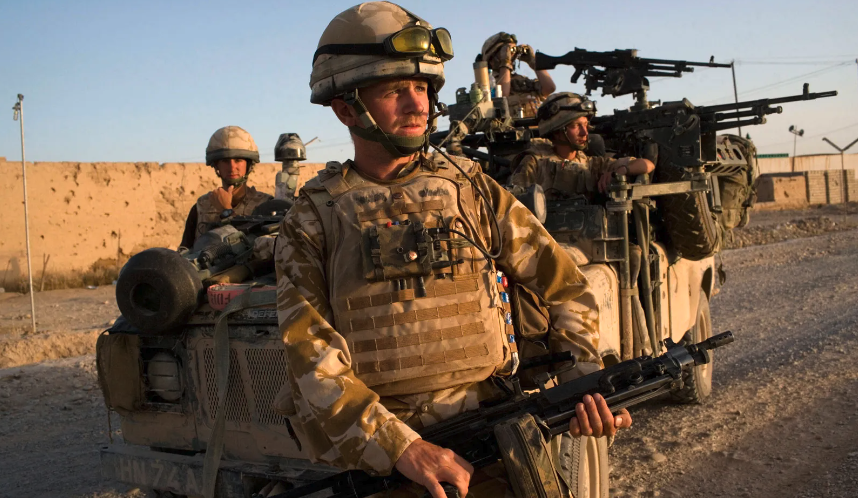
With military operations, taking people into austere environments with combat resulting in casualties and fatalities, occurrences against the usual grain of life, it is expected that people witnessing such events may be psychologically affected. Although PTSD is a new term, added to the Diagnostic and Statistical Manual of Mental Disorders in the 1980’s, war and the psychological scars it brings are not new, with its earliest mention reported in the account of the battle of Marathon by Herodotus, written in 440 bc (History, Book VI, transi. George Rawlinson):
A strange prodigy likewise happened at this fight. Epizelus, the son of Cuphagoras, an Athenian, was in the thick of the fray and behaving himself as a brave man should, when suddenly he was stricken with blindness, without blow of sword or dart; and this blindness continued thenceforth during the whole of his afterlife. The following is the account which he himself, as I have heard, gave of the matter: he said that a gigantic warrior, with a huge beard, which shaded all his shield, stood over against him; but the ghostly semblance passed him by, and slew the man at his side. Such, as I understand, was the tale which Epizelus told. (Dialogues in clinical neuroscience)
Most studies identify clear linkages between PTSD, suicide, and military service. (PTSD and Suicides Among Veterans — Recent Findings) So with recent MDMA trials showing fantastic results with PTSD sufferers there is much anticipation about finally being able to help veterans who at present can only be offered Cognitive Behavioral Therapy, Exposure Therapy or serotonin inhibitors. All of which show low efficacy in the face of PTSD and as such these types of treatment have high dropout rates. (Nature Medicine)
Whilst the calls for expedited clinical trials are exciting. It appears unlikely that this pool of ideally suited individuals will ever be permitted to undergo MDMA-assisted therapy whilst serving in the military.
MDMA is an illegal substance in the UK and there is a zero tolerance policy on drug use with in the UK’s armed forces. This is enforced by randomised Compulsary Drug Testing (CDT), a positive case resulting in instant dismissal from the service. If drugs are already banned in national legislation, why does the forces spend limited financial resource on CDT?
Because controlled substances such as MDMA, cause altered states of consciousness, which can lead to developing a spiritual side of self, or an expansive awareness that exists outside of limiting beliefs that war is natural and necessary.
Nicknamed the love drug, MDMA enhances feelings of connection, love, belonging and understanding. Making it possible to revisit and process traumatic memories from a place of loving understanding for self and situation.
A diagnosis in PTSD or C-PTSD does not automatically dispel you from armed forces service. As such you may be in a tricky situation where you would be perfectly suited to MDMA-assisted therapy but you are also a part of an organisation that requires you to be defence minded. I doubt the Ministry of Defence would allow serving members such therapy in the fear that one not only loses their defence orientation but also starts to influence other front-line people, who may have experienced or witnessed loss in active duty.
Overall, PTSD is not a healthy or happy way of life. With this new treatment potentially reaching clinics in the near future, one may find themselves deciding between keeping their livelihoods or forfeiting it in order to receive treatment. Only you can make the best decision for you and your dependents future reader, but life is far more enjoyable when you are able to shake the shackles of PTSD for good.
References
- MDMA-assisted therapy for severe PTSD: a randomized, double-blind, placebo-controlled phase 3 study, Nature Medicine, available at https://www.nature.com/articles/s41591-021-01336-3 (Accessed: 23 Feb 23)
- Symptoms — Post Traumatic Stress Disorder. Available at: https://www.nhs.uk/mental-health/conditions/post-traumatic-stress-disorder-ptsd/symptoms/ (Accessed: 23 Feb 23)
- From shell shock and war neurosis to posttraumatic stress disorder: a history of psychotraumatology, Dialogues in clinical neuroscience, available at: https://www.ncbi.nlm.nih.gov/pmc/articles/PMC3181586/ (Accessed 23 Feb 23)